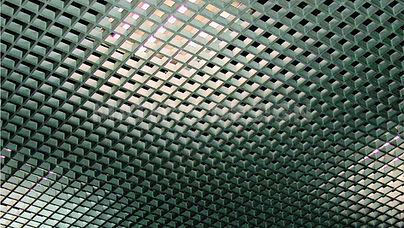
Ceiling Form
Ceiling forms can generally be categorized as either enclosed ceilings or open ceilings. Enclosed ceilings are continuous surfaces that completely cover the structural elements and utilities above. In contrast, Open ceilings expose or partially reveal these elements by using design features like grids, baffles, or suspended panels.

Enclose ceiling refers to a ceiling system that fully covers and conceals the space above it. In Mathys design, all structural elements, HVAC ducts, pipes, wiring, and other mechanical components are hidden from view. The result is a clean, uniform appearance that can enhance acoustics, fire safety, and space aesthetics. Enclosed ceilings are traditional and are common in offices, schools, hospitals, and residential spaces where a tidy and finished look is desired.


Open ceiling refers to a ceiling design where part or all of the space above the ceiling line is intentionally left visible or open, or where the ceiling system is designed with openings, grids, or floating elements. In Mathys design, open ceilings can include:
Cell form: Grid-like structures creating a pattern of open cells.
Baffle form: Vertical panels suspended with spaces between them.
Cloud form: Suspended panels that cover only part of the ceiling.